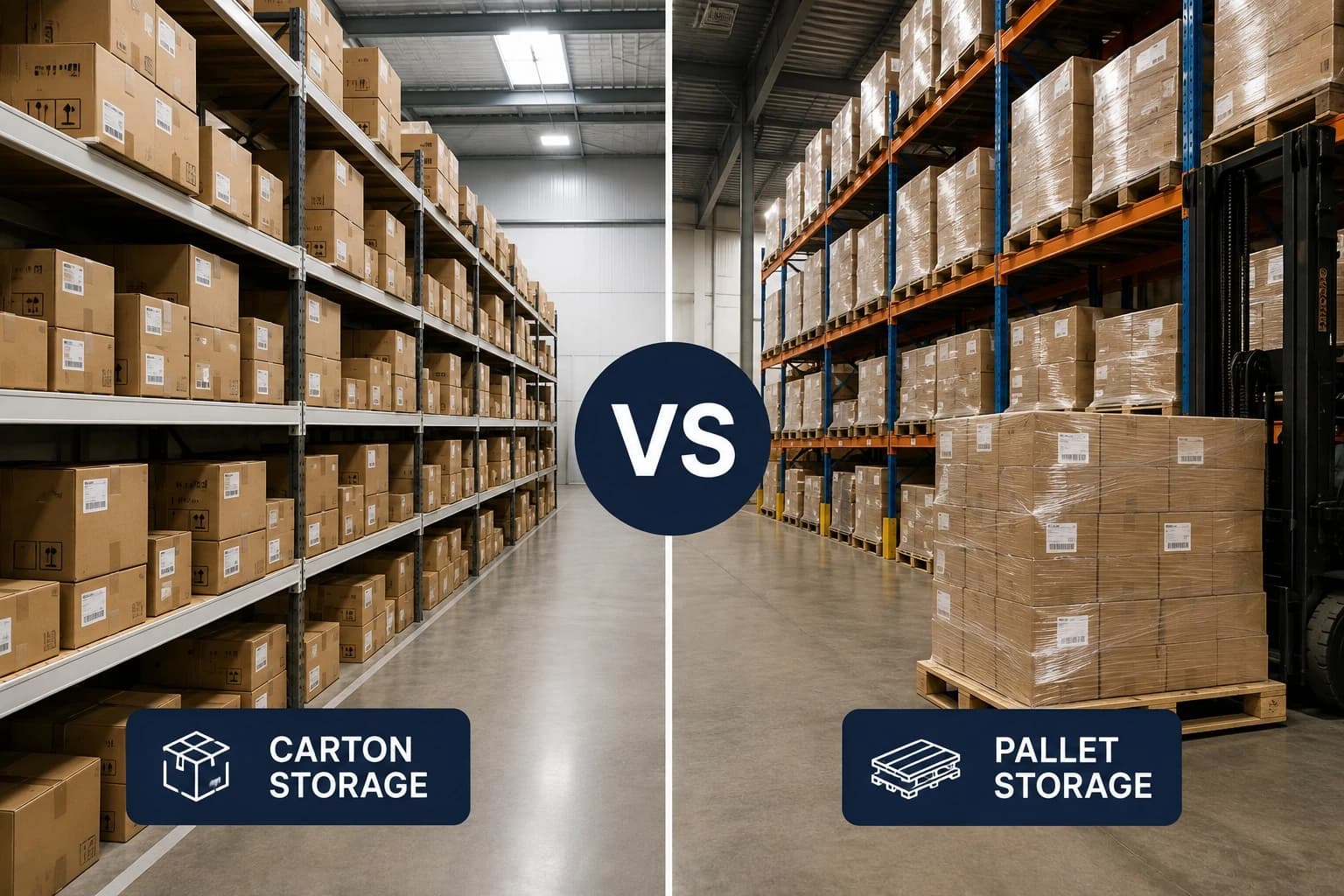
Choosing the right storage method can affect warehouse efficiency, fulfilment speed and logistics costs.
Two common storage options for e-commerce inventory are carton storage and pallet storage.
Neither option is automatically better. The right choice depends on the type, quantity and movement of your inventory.
What Is Carton Storage?
Carton storage means inventory is held in individual cartons or suitable storage containers rather than as complete pallets.
It can work particularly well for businesses with smaller quantities of inventory or multiple SKUs.
Carton-based storage may be suitable when:
- Products are relatively small
- Inventory quantities per SKU are limited
- Stock moves frequently
- Products need to be accessed individually
- The business does not require full pallet positions
What Is Pallet Storage?
Pallet storage is designed for larger quantities of inventory grouped on pallets.
It is commonly used for:
- Bulk inventory
- Supplier deliveries
- Wholesale stock
- FBA inventory
- Larger products
- High quantities of the same SKU
Pallets can be moved efficiently using warehouse handling equipment and can simplify larger inbound and outbound movements.
Carton Storage vs Pallet Storage
The best option depends on how your inventory moves.
Carton Storage May Be Better When:
- You have many smaller SKUs
- You hold limited quantities of each product
- Individual products are picked frequently
- You want to avoid using a full pallet position unnecessarily
Pallet Storage May Be Better When:
- You hold large quantities
- Inventory arrives already palletised
- Products are moved in bulk
- You regularly send pallet shipments
- You need reserve stock behind your pick locations
Can a Business Use Both?
Yes.
In fact, many e-commerce warehouse operations use a combination.
For example, reserve stock may remain on pallets while smaller quantities are moved into accessible picking locations for daily fulfilment.
This creates a balance between efficient bulk storage and efficient order picking.
What Else Affects Storage Requirements?
Storage is not only about the number of products.
Several factors can influence the space required:
- Product dimensions
- Carton dimensions
- SKU count
- Units per SKU
- Inventory turnover
- Seasonal stock
- Pallet height
- Product handling requirements
- Order frequency
Two businesses holding the same number of units may require very different amounts of warehouse space.
Storage and Fulfilment Together
Using the same operation for storage and fulfilment means inventory does not need to move between separate facilities every time an order is received.
Products can remain in the warehouse until required for:
- Customer orders
- Amazon FBA replenishment
- Wholesale orders
- International forwarding
- Other inventory movements
Warehousing with Shipext
Shipext provides flexible UK warehouse solutions including carton and pallet storage alongside fulfilment, FBA preparation, shipping and returns processing.
Not sure which storage model is right for your inventory? Contact Shipext with your SKU count, product dimensions and expected stock levels and we can discuss the appropriate setup.
Get in Touch